SPECIAL DEAL FROM US◆CONTACT US NOW◆SAMPLE KIT BEFORE BULK◆MOQ 50 TRAYS◆2D – 14D PREMADE FANS◆PRIVATE LABEL READY◆SPECIAL DEAL FROM US◆CONTACT US NOW◆SAMPLE KIT BEFORE BULK◆MOQ 50 TRAYS◆2D – 14D PREMADE FANS◆PRIVATE LABEL READY◆
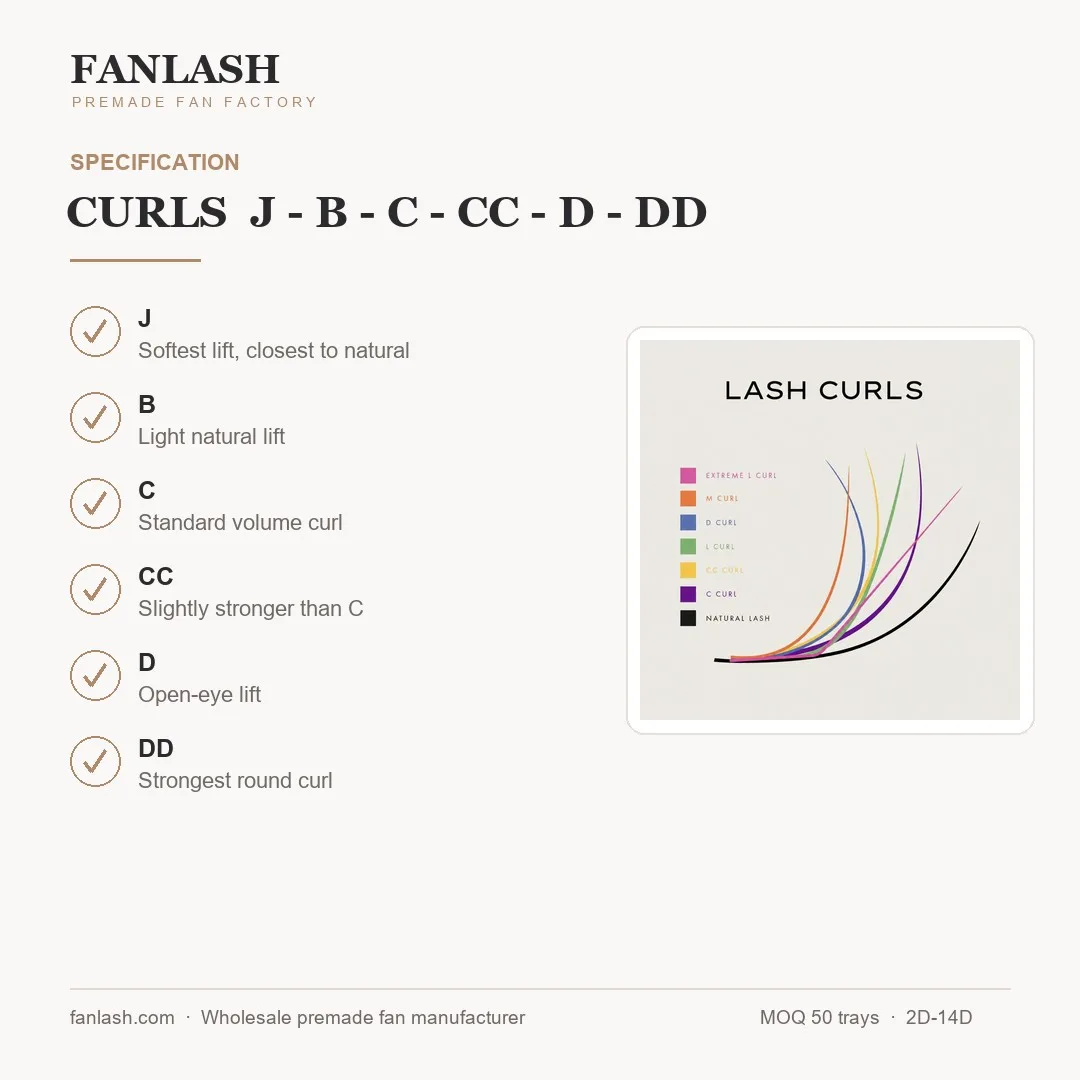
Six curls are produced as standard: J, B, C, CC, D and DD. J and B sit closest to the natural lash and give the most natural lift, C and CC are the everyday volume choice, and D and DD open the eye most strongly for fuller sets.
J
Softest lift, closest to the natural lash
B
Light natural lift for everyday sets
C
Standard volume curl, most requested
CC
Slightly stronger than C, still soft
D
Open-eye lift for fuller sets
DD
Strongest round curl
Lengths — Choose The Right Length
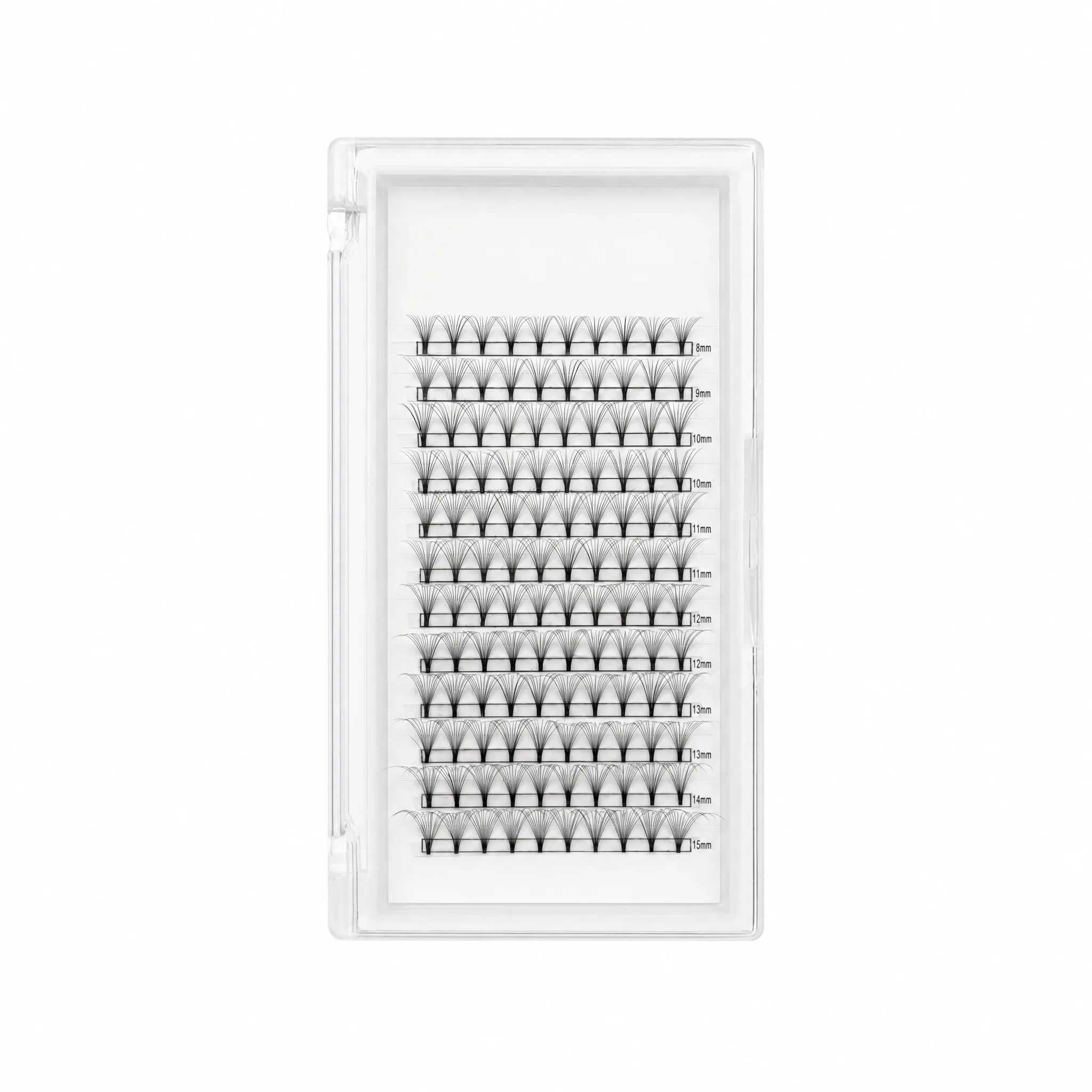
From 7 mm to 16 mm. Shorter lengths sit closer to the natural lash for everyday sets; longer lengths create dramatic or cat-eye effects.
7–9 mm
10–12 mm
13–14 mm
15–16 mm
Thinner. Lighter. Stronger.
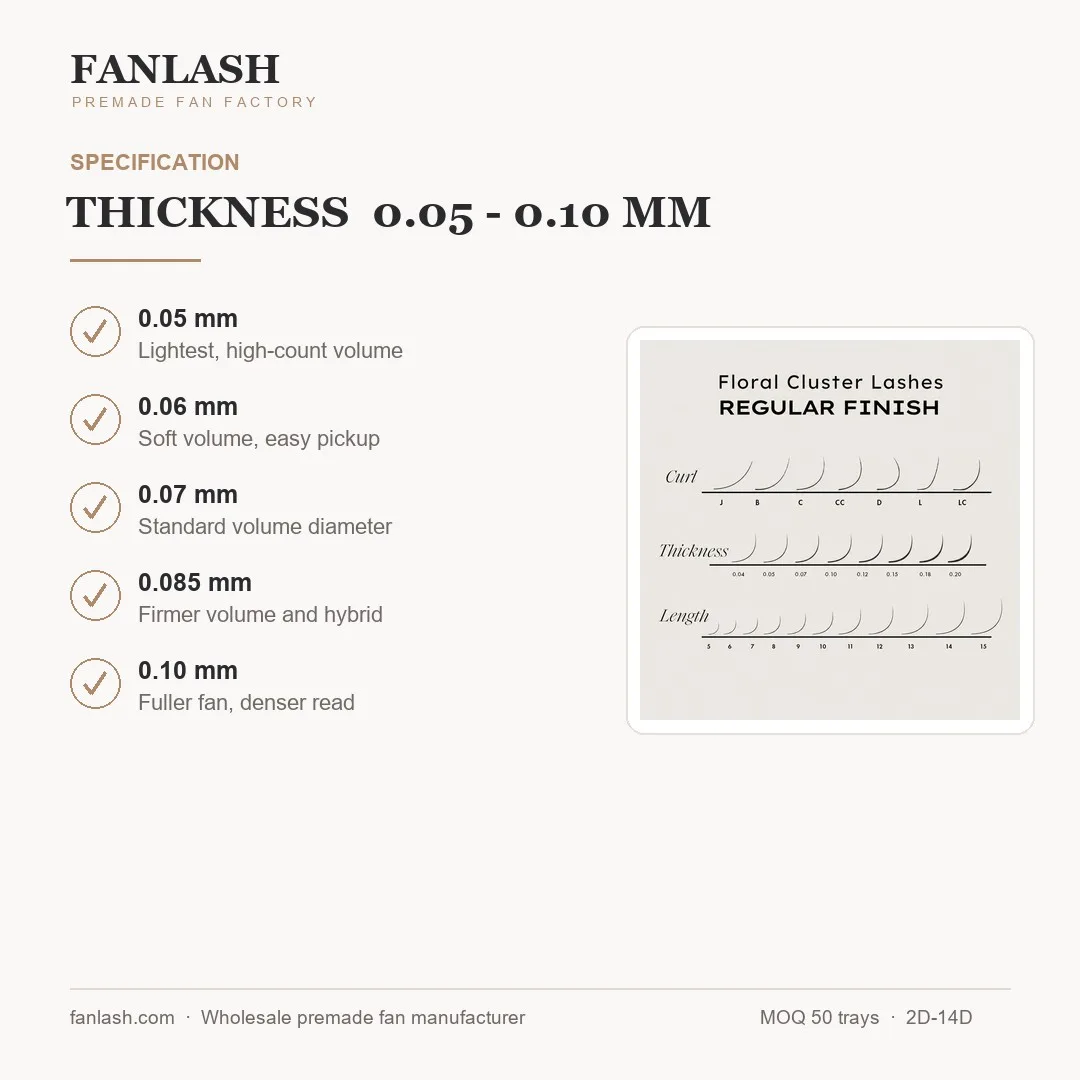
Thickness is quoted in five steps: 0.05 mm, 0.06 mm, 0.07 mm, 0.085 mm and 0.10 mm. Thinner diameters keep high-count volume sets light; the middle steps are the volume workhorse; the thicker end is used where a fan has to read as a denser hair.
0.05 mm
Lightest, high-count volume
0.06 mm
Soft volume, easy pickup
0.07 mm
Standard volume diameter
0.085 mm
Firmer volume and hybrid work
0.10 mm
Fuller fan, denser read
Premium Quality Matters
Our premium fibre — soft, lightweight and consistent Consistent curl — stable from sample to repeat order Clean base — easier pickup for artists Reliable supply — stable production across reorders
A lash specification is six decisions, and they only work in one order. Density decides how much fibre a fan carries. Curl decides how the set reads. Diameter decides weight. Length decides the shape you can build. Tray format decides how the artist works through a client. Get the order wrong and you end up re-quoting a specification you already approved — which is the most common reason a first order slips.
This guide is written for the buyer, not for the artist. Each section names the decision you are actually making at that step, what goes wrong if you make it out of order, and how to confirm the answer before it reaches a production line.
FanLash holds a stock range of 4D, 5D, 7D, 8D, 9D, 10D and 12D premade fans, and produces any density between 2D and 14D to a buyer's specification. Everything below applies to both the stock range and the custom range, with one difference: stock moves straight into an order, custom moves through a sample first.
Density: Choosing A D Count
Density is the number of individual lashes bonded into one fan. It is the first decision because it changes almost everything downstream — the fibre weight per fan, the diameter that behaves well with that count, the tray count your artists get through, and the look a set produces on the eye.
The mistake buyers make is choosing the highest density in the range as a default. A 12D fan is not a better product than an 8D fan; it is a heavier, wider, more dramatic product that suits a different client. Stock the density your clients already ask for, then extend upward once that density reorders.
**The decision at this step:** which density carries your core service, and which second density covers the clients who want more.
**What goes wrong:** stocking three densities before one is proven. Each density is its own specification — its own sample approval, its own tray count maths, its own shelf life in your inventory. Three unproven densities is three times the risk for the same amount of market information.
**How to confirm:** order one density, run it on real clients for a full cycle, then decide whether the next density is above it or beside it. A salon standardising on volume sets usually adds density upward. A brand building a range usually adds density sideways, so the catalogue reads as a range rather than as one product at three strengths.
The stock range covers 4D through 12D in seven steps. Anything between 2D and 14D can be produced to specification, including counts that sit between the stock steps — a 6D or a 13D fan is a specification question rather than a catalogue gap. Custom density needs a sample before it needs an order.
Curl: Six Standard Curls
Curl decides how lifted a set reads before density is even considered. Two identical 8D trays in different curls will look like different products on the same client, which is why curl is the second decision and not an afterthought.
Six curls are produced as standard: J, B, C, CC, D and DD. J gives the softest lift and sits closest to the natural lash. B adds a light lift for everyday sets. C is the standard volume curl and the most requested. CC sits slightly stronger than C while staying soft. D opens the eye for fuller sets. DD is the strongest round curl.
**The decision at this step:** one curl for the core service, and whether a second curl is justified by client demand rather than by curiosity.
**What goes wrong:** launching with two or three curls because the range looks better in a catalogue. Each curl is a separate stock line, and a curl that does not reorder sits in inventory while still appearing on your price sheet. The catalogue looks complete and the shelf looks dead.
**How to confirm:** match the curl to the eye shape your clients actually have and the look they ask for. Clients who arrive asking for natural sets rarely move to DD; clients who want an open, photographed look rarely stay at J. If your market is split, split the range by curl before splitting it by density — curl is the variable a client can see and describe without knowing the terminology.
One more point buyers rarely ask about until the second order: curl is a production property as well as a specification value. Where the curve begins along the fibre has to stay consistent across the tray, not just match the letter. A tray that is correct on paper and inconsistent row to row reads as uneven on a finished set. Approve curl on a tray, not on a chart.
Diameter: 0.05 mm To 0.10 mm
Diameter is quoted in five steps: 0.05 mm, 0.06 mm, 0.07 mm, 0.085 mm and 0.10 mm. It is the variable most likely to change the weight of a set without changing any other number on the label, which makes it the quietest source of complaints in the category.
Thinner diameters keep high-count volume fans light. The middle steps carry most volume work. The thicker end is used where a fan has to read as a denser hair. Diameter is made from BSF.T fibre across the range, and fibre consistency — not the material name — is what a buyer should be checking.
**The decision at this step:** one diameter matched to your core density, rather than a diameter chosen on its own.
**What goes wrong:** choosing density and diameter independently. A 12D fan in a thick diameter is a heavy fan that clients feel at the tip; a 4D fan in a very thin diameter is a fan that reads as almost nothing on the eye. Density and diameter have to be decided as a pair, because together they set the weight a natural lash carries.
**How to confirm:** hold the tray against a light background and compare fibre thickness across rows, not just within one row. Pick fans from the top and bottom of the tray and compare. A controlled batch varies minimally; a batch that varies visibly is a batch that will read unevenly on a set.
The five steps above are what the stock range is quoted against. Anything outside them is a specification question rather than a catalogue choice, and it moves through a sample like any other custom value.
Length: 7 mm To 16 mm
Length runs from 7 mm to 16 mm. Short lengths sit close to the natural lash and suit everyday and natural sets. Long lengths build dramatic, cat-eye and editorial looks. The useful unit of thinking is not a single length but a **length band**, because a service is built from a spread of lengths across the eye rather than from one number.
The practical bands: 7–9 mm for the inner corner and natural work, 10–12 mm as the working middle of most sets, 13–14 mm for the outer third and lengthened shapes, 15–16 mm for dramatic and photographic looks. Most service menus live inside the middle two bands, which is why a tray built around them reorders faster than a tray built at the extremes.
**The decision at this step:** the length band your service menu sits in, and whether one tray can cover it or the menu needs two.
**What goes wrong:** choosing by maximum length. A menu quoted at 15–16 mm sells fewer sets than the same menu quoted at 10–12 mm, and the trays at the top of the range age while the middle sells out. Length is a service decision before it is a product decision.
**How to confirm:** count the sets you built last month by the length your clients actually wore, not by the length you offered. That count is the band to stock. Then decide whether the outer third of the eye needs its own tray or can be covered from the same mix.
Length also has a physical limit worth naming: a length that exceeds the natural lash by too much moves weight to the tip rather than to the base, which changes how the set wears. That is a conversation to have with your artists before the order, not after the first complaint.
Tray Format: Single Length Or Mixed Length
Tray format is the decision buyers leave until last and then have to live with longest, because it changes how an artist works through a service rather than what the product is.
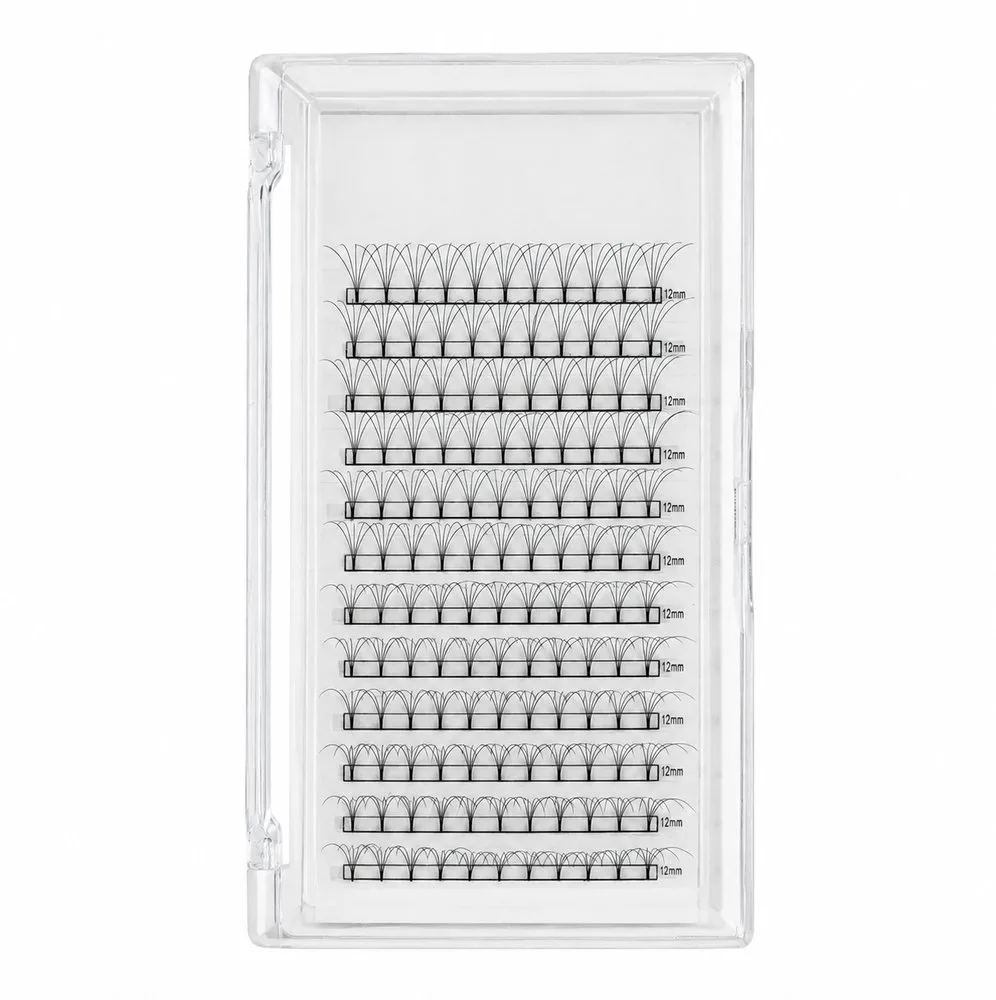
**A single tray carries one length.** Every fan in the tray is the same length. That suits a fixed service menu, a predictable count per set, and salons that reorder by the tray. It is the simplest format to cost, because one tray maps to one known number of sets.
**A mixed tray carries several lengths in one tray.** That suits artists who build a graduated set across the eye in one pass, and it suits retail-facing brands whose customer expects to open one box and finish a set. It removes the need to open several trays during a service, which is the format's real benefit — it is a workflow decision, not a value decision.
**The decision at this step:** does your artist open one tray per service or several, and does your customer expect to buy a set or a stock item.
**What goes wrong:** ordering mixed trays for a salon that works one length at a time, or single trays for a brand selling to consumers who expect a complete set in one box. Both mistakes are invisible on delivery and obvious in use.
**How to confirm:** watch one service. If the artist reaches for a second tray, the format is wrong. If the customer asks what else they need to buy, the format is wrong in the other direction.
Tray format also fixes how you count inventory. A single-length tray has one count to track; a mixed tray has a length mix to track, and a mix that drifts is harder to notice than a count that drifts. Write the mix into the specification, not just the format.
How To Order From This Specification Sheet
The six decisions above are the whole of a specification. What remains is turning them into an order that a production line can run without asking questions.
**Write the specification as six lines.** Density, curl, diameter, length band, tray format, colour. Six lines, no prose. A specification that needs a paragraph to explain is a specification that will be reinterpreted.
**Colour is its own decision.** Seven colours are available, and colour is the field buyers most often leave to the sample stage. Decide whether colour is central to your range or an accent line before you order, because a colour line multiplies the SKUs in every other field.
**Start at MOQ 50 trays.** The stock range is built for a 50-tray starter order, which is enough to run a real service cycle without committing to a full production run. Use it to test one density and one curl properly rather than three of each badly.
**Approve a physical sample first.** A sample tray confirms what the six lines actually produce: base behaviour, spread, curl consistency, fibre weight and how the fan releases on pickup. Approve the tray, then record what you approved.
**Keep the record.** Density, curl, diameter, length band, tray format, colour, and the packaging version if packaging is part of the order. The record is what a repeat order is measured against, and it is the only thing that stops a specification drifting between runs.
**What to send us:** your six specification lines, your market, and your estimated quantity. If one of the six is undecided, say which one — a brief with five decisions settled and one open is easier to quote than a complete-looking form with six guesses in it.
Request a specification sample and quote against the six lines above, and we will confirm the density, curl, diameter and tray format against the range before anything reaches production.
How To Specify A Lash Order Without Back-And-Forth
A specification is five decisions made in the right order. Getting the order wrong is what turns a one-week order into a month of samples.
01Construction firstShort stem, long stem, tapered point or waistband tape. The base is what the artist handles, so it decides the pickup feel before density is even discussed.
02Density secondD-count sets how many lashes are bonded into one fan. Choose it against the density your clients already ask for, not against the highest number in the range.
03Curl thirdCurl sets how lifted the set reads. Stock one curl first; adding a second before the first is proven splits stock without proving either.
04Diameter fourthFibre diameter changes weight and how long a set lasts. Match it to fan density rather than choosing the two independently.
05Length mix lastSingle length suits a fixed service menu. Mixed length lets the artist map a graduated set from one tray.
Frequently Asked Questions
What are the standard curls?
J, B, C, D and the softer baby-straight and baby-curve options. Each curl reads differently on the eye, so the choice is driven by the look your market asks for rather than by what is in stock.
How do I choose a length range?
By the natural lash length of your client base and the shape you want to build. A length that exceeds the natural lash by too much adds weight at the tip rather than at the base.
What thickness should I stock first?
The thickness that matches the density you sell most. Stocking a thin and a thick diameter before either is proven usually leaves one tray ageing on the shelf.
Does D-count change the price?
Yes, because it changes how many lashes go into each fan. A higher D-count consumes more fibre per fan, which is why price is quoted per specification rather than per tray.
What is a mixed-length tray for?
It lets the artist build a graduated set from a single tray, without opening several single-length trays during one service.
How do I confirm a specification is repeatable?
Approve a physical sample, then record construction, density, curl, diameter, length mix, tray format and packaging version. Later runs are checked against that record.
Need Help Choosing A Specification?
Tell us your service menu and market — we recommend a practical specification and send samples.